
How the Dutch Wove the Fabric of American History
Most Americans learn a specific version of their nation’s origins. They study the Pilgrims, memorize the Revolutionary War battles, and celebrate the Founding Fathers. However, they frequently overlook a crucial group of architects who shaped the United States long before the first shot rang out at Lexington. The Dutch played an indispensable role in American history, yet their contributions remain hidden beneath layers of Anglo-centric storytelling. From establishing early colonies to firing the first international salute to the American flag, the Netherlands left permanent marks on the American landscape.
Consequently, exploring this forgotten narrative reveals a richer, more complex story of how the United States came to be. Understanding the Dutch influence transforms our perspective on early America. It shifts the focus from a purely British colonial endeavor to a vibrant, multicultural foundation that embraced trade, diversity, and rebellion from its very inception.
The Forgotten Foundation: New Nederland and the Birth of Diversity
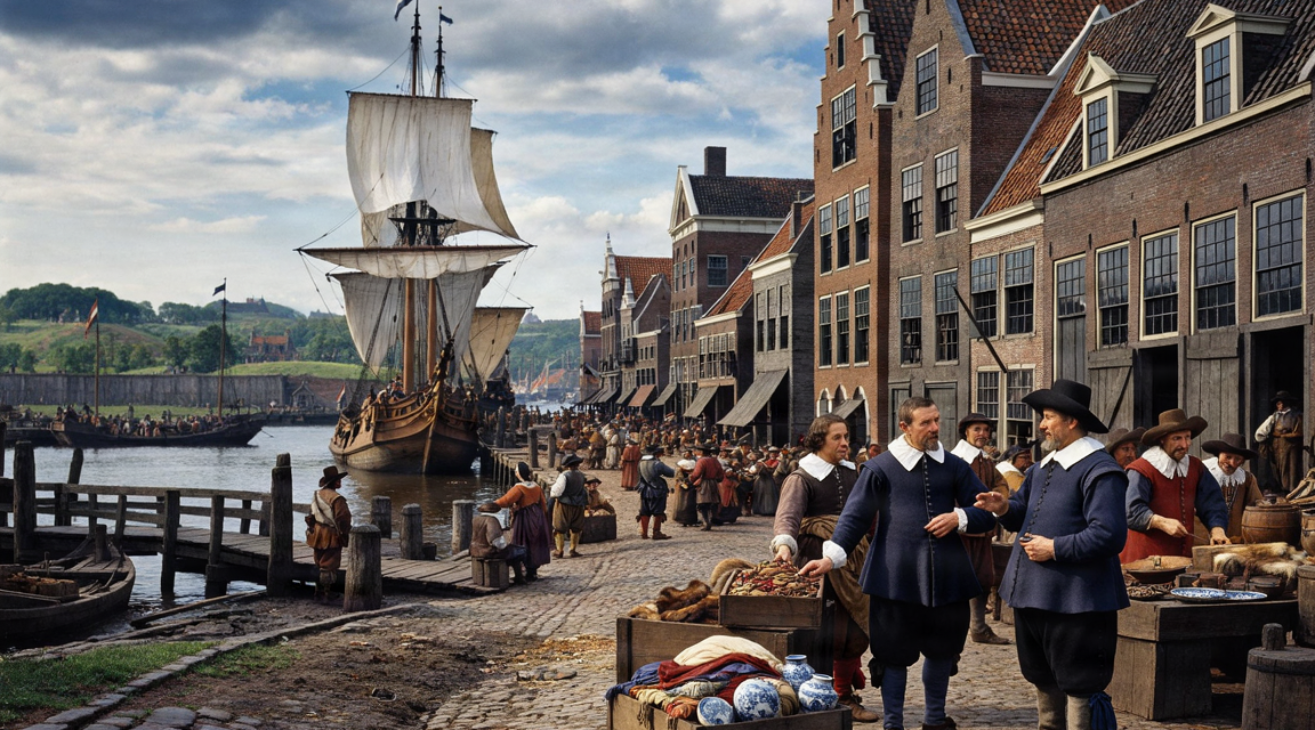
In 1609, Henry Hudson sailed up the river that now bears his name, claiming the surrounding territory for the Dutch West India Company. Shortly after, settlers established New Nederland, a sprawling colony that stretched from present-day Delaware to Connecticut. Unlike the Puritans who sought religious isolation in New England, the Dutch built a commercial empire driven by trade and pragmatism. Therefore, they actively encouraged people of various faiths, languages, and backgrounds to settle in their territory. This deliberate policy created the first truly diverse society in North America.
At the heart of this bustling colony sat New Amsterdam, located on the southern tip of Manhattan Island. The English eventually seized control of the settlement in 1664 and renamed it New York, effectively erasing the Dutch administrative presence. Nevertheless, the cultural DNA of New Amsterdam survived the transition. The Dutch introduced concepts like religious tolerance, free-market capitalism, and a pluralistic society that directly influenced the modern American ethos. Even iconic American traditions, such as Santa Claus, evolved from the Dutch figure of Sinterklaas. The infrastructure, street layouts, and entrepreneurial spirit of New York City still echo the ambitions of those early Dutch merchants.
The First Salute: St. Eustatius and the Spark of Independence
While New Nederland laid the cultural groundwork, another Dutch territory provided critical support during the American Revolution. Across the Atlantic, the tiny Caribbean island of St. Eustatius served as a major trading hub. Because the Dutch prioritized commerce over political alliances, merchants on the island happily sold weapons, gunpowder, and supplies to the rebellious American colonists. In fact, St. Eustatius became so vital to the American war effort that British officials labeled it “the Golden Rock,” recognizing its immense contribution to the rebel cause.
Furthermore, history records a monumental event on November 16, 1776, that forever linked the Dutch to American independence. When the American brigantine Andrew Doria entered the harbor of St. Eustatius, it fired a salute to announce its arrival. Governor Johannes de Graaff ordered the fort’s cannons to return the fire. By doing so, he executed the first official acknowledgment of American sovereignty by a foreign power. This single act infuriated the British Crown and escalated global tensions, but it also legitimized the young American republic on the world stage. Without the bold decision made on that small Dutch island, the fledgling nation might have struggled far longer to secure international recognition and essential military aid.
Echoes in the Architecture of a Nation
The impact of the Dutch extends far beyond isolated historical events; it permeates the very structure of American governance and daily life. Early Dutch settlers introduced the concept of the corporation to North America, establishing frameworks that allowed businesses to operate independently of individual owners. Additionally, they brought architectural styles, agricultural techniques, and vocabulary words—such as “boss,” “cookie,” and “stoop”—that Americans use every day without realizing their origins. These linguistic and structural remnants prove that the Dutch did not merely visit America; they helped build it.
Ultimately, acknowledging this history corrects a significant blind spot in the American educational narrative. The Dutch demonstrated that a society could thrive through trade, tolerate differing beliefs, and challenge imperial powers. By examining the legacies of New Nederland, New Amsterdam, and St. Eustatius, Americans can finally appreciate the profound debt their nation owes to the Netherlands. Recognizing these contributions does not diminish the achievements of other founders; rather, it completes the picture of a nation built by a coalition of visionaries from across the globe.