Sleepover Diplomacy: Pajamas, Politeness… and Political Amnesia

🛏️ From Palace to Pillow Talk

Let’s rewind.

Trump stays at Huis ten Bosch. Calls it “beautiful.” Sleeps “wonderfully.”
And just like that, a diplomatic IOU is created:

You liked the bed? Great. Our turn now.

Somewhere, diplomacy has quietly turned into Airbnb with better uniforms.


🎭 The Grand Performance

Picture the scene:

  • Crystal glasses clinking
  • Polite laughter echoing through historic halls
  • Carefully worded conversations about “shared values”

Meanwhile, half of Europe is watching like:

Wait… aren’t we supposed to be worried about this dangerous idiot?

But don’t worry—once dessert is served, everything becomes very manageable.


🧠 Selective Memory, World-Class Level

It’s actually impressive.

One moment:

  • Strong statements about democracy
  • Concerns about global stability
  • Serious discussions about the future of Europe

The next moment:

  • “What a lovely dinner!”
  • “Did you try the dessert?”
  • “We must do this again sometime!”

If political memory were a sport, this would be Olympic gold.


🤝 Diplomacy, But Make It Cozy

Of course, defenders will say:

“This is just diplomacy.”

And they’re not wrong, but….

But let’s not pretend this is just a quick coffee meeting.
This is dinner. At the White House. With an overnight stay.

That’s not diplomacy—that’s a bonding experience.

You don’t just discuss trade agreements…
you exchange breakfast preferences.


🍿 The View from the Outside

For the average person, it’s hard not to see the contradiction:

  • Public messaging: “We must be cautious.”
  • Private setting: “Pass the wine, please.”

It creates this slightly absurd image where global tensions are discussed between courses, and everything is politely wrapped up before coffee.


🧭 So what is this really?

Hypocrisy?
Necessity?
Or just… the world’s most awkward dinner party?

Maybe it’s all three.

Because in international politics, you don’t always get to choose your dinner guests.
But you do choose whether you stay the night.


😏 Final Thought

Somewhere between the appetizer and the overnight stay, something gets lost.

Maybe it’s consistency.
Maybe it’s credibility.
Or maybe it’s just the uncomfortable truth that, in the end…

Even geopolitics comes down to:
“You came to my place, now I’ll come to yours.”

Sleep tight, world. 🌍

Something ain’t right…. you don’t have dinner with a fascist… period!!

Confessions of a Dutchman Watching Americans Eat

Let me explain.

Back in the Netherlands, eating is a coordinated Olympic sport. Knife in the right hand, fork in the left—always. Even when the knife isn’t cutting anything, it’s still there, loyally assisting like a sous-chef who refuses to go home. You gently guide your food onto the fork with elegance, precision, and just a hint of quiet superiority.

Then I arrived in America.

And suddenly… chaos.


🍴 The Great Fork Shuffle

Americans, I learned, have a completely different system. It goes something like this:

  1. Cut food with knife (so far, so good… I felt hope)
  2. Put knife down (wait—what?)
  3. Transfer fork to the other hand (why?!)
  4. Eat

At first, I thought I was witnessing a temporary glitch. Maybe everyone at the table had just forgotten how hands work. But no—this is the system.

It’s like watching someone start driving a car… and then halfway through switching seats with themselves.


👍 The Thumb: The Real MVP

But the real moment of cultural enlightenment came when I saw it:
The Thumb Assist™.

Instead of using a knife like a civilized European food-guide, Americans casually use their thumb to push food onto the fork. Just a gentle nudge. A little “hop on there, buddy.”

And honestly? Respect.

It’s bold. It’s efficient. It’s slightly illegal in at least three European countries.


🇪🇺 Meanwhile, in Europe…

Across Europe, meals are less about eating and more about maintaining centuries of unspoken etiquette:

  • The knife never leaves your hand
  • The fork never switches sides
  • Your posture says, “I might be dining, but I could also attend a royal banquet at any moment”

If a Dutch person saw someone put their knife down mid-meal, there would be concern. Possibly a wellness check.


🇺🇸 The American Approach: Freedom on a Plate

But here’s the thing—I’ve grown to appreciate the American way.

It’s relaxed. It’s practical. It says,
“Why use two utensils when one hand and a confident thumb will do?”

There’s a certain freedom to it. A kind of culinary independence. You’re not bound by tradition—you’re just trying to get that piece of chicken onto your fork without overthinking your life choices.


🤝 Finding Middle Ground

These days, I live somewhere in between:

  • I still hold my knife like a proud Dutchman
  • But occasionally… when no one is watching…
    I let the thumb assist

And you know what?

It works.


🍽 Final Thoughts

Dining habits say a lot about a culture.
Europe says: “Let’s do this properly.”
America says: “Let’s just eat.”

And somewhere in the middle is a Dutch guy, slightly confused, holding a knife he may or may not need, wondering if his thumb is about to betray his upbringing.


If you ever want to spot a European in America, just look at the dinner table.

They’re the ones still holding the knife…
Like it’s a matter of national identity.

And honestly?
It kind of is.

A Dutch-American’s Guide to the Art of Partying: Bigger, Better, and More Showers!

Weddings: The Ultimate Budget Buster

American weddings are next-level. The average Dutch wedding? You grab a nice dress, show up at city hall, have a toast, and call it a day. The American wedding? Oh boy. We’re talking about a full weekend event that includes engagement parties, bridal showers, bachelor and bachelorette trips (sometimes to Vegas, because why not?), rehearsal dinners, and finally, the grand wedding day itself. And don’t even get me started on the price tag. A wedding here can cost more than a canal house in Amsterdam (well, almost). It’s like the Olympics of love – may the best couple win!

Shower Season: Raining Gifts All Year Round

One of the first things that blew my Dutch mind in the U.S. was the number of showers. In the Netherlands, a baby just… arrives. No big build-up, no elaborate planning. In America, the baby gets a gender reveal party (complete with colored smoke, cakes, or even fireworks), followed by a baby shower (where the parents-to-be are gifted enough baby clothes to dress a small army). Then there’s the wedding shower, the engagement party, and who knows what else. Honestly, I’m still waiting for someone to invite me to their “Got a New Dog” shower.

The Holiday Marathon: Let’s Celebrate EVERYTHING!

American holidays are serious business. Christmas doesn’t start in December—it starts in October. By the time Halloween candy is gone, Santa is already waving at you from every store window. And when Christmas finally ends? Bam! Valentine’s Day decorations take over before you even take down your tree. Easter comes with massive chocolate bunnies, Thanksgiving is a turkey apocalypse, and Memorial Day seems less about remembrance and more about BBQs and pool openings.

In the Netherlands, we like to keep things a bit more chill. Christmas lasts two days, Easter too. But our biggest bash? King’s Day! The entire country turns orange – but in a festive way, not in a “Trump’s fake tan” way. It’s the one day a year where everyone becomes a street vendor, beer is practically a currency, and we collectively decide that dancing on boats is a normal thing.

Thanksgiving: The Great Turkey Sacrifice

Speaking of Thanksgiving… 50 million turkeys are sacrificed each year for this feast. That’s more than three times the human population of the Netherlands! If we did that back home, we’d probably be eating turkey until Sinterklaas showed up. And let’s not forget Black Friday—the day after Thanksgiving—where Americans go from giving thanks for what they have to elbowing each other over a discounted flat-screen TV.

Halloween: The Dutch are Catching On!

Halloween is another event that has taken over the U.S. in a way the Dutch can’t quite grasp. Dressing up? Fun! Trick-or-treating? Sounds cute! Spending hundreds of dollars on elaborate decorations, fog machines, and animatronic zombies for your front yard? Now we’re confused. But thanks to marketing, Halloween is creeping into the Netherlands, and I have to admit… it’s kind of fun watching Dutch kids struggle to find enough houses that actually participate in trick-or-treating.

Let’s not forget the origin of Santa!!

Ah, the tale of how our very own Sinterklaas packed his bags, hopped on his steamboat, and somehow transformed into the jolly, red-suited Santa Claus—it’s a classic case of Dutch efficiency meeting American marketing genius!

So, picture this: It’s the 17th century, and the Dutch are busy sailing across the world, trading spices, tulips, and apparently, holiday traditions. When they settled in New Amsterdam (now New York), they brought along their beloved Sinterklaas—a stately, wise old bishop with a long beard, a tall miter, and a horse that somehow managed to prance across rooftops without violating any 17th-century building codes.

The Americans, ever the innovators, took one look at Sinterklaas and thought, “Hmm… great concept, but let’s make him more marketable!” Gone was the bishop’s hat—replaced by a fluffy red cap. The flowing robes? Trimmed down into a snazzy red suit. The dignified demeanor? Swapped for a jolly, cookie-loving grandpa vibe. And the horse? Well, apparently, one rooftop-prancing stallion wasn’t enough, so they upgraded him to an eight-reindeer-powered sleigh. Efficiency at its finest.

And let’s not forget the biggest upgrade: presents. While Sinterklaas had been carefully checking his naughty-and-nice list and handing out gifts to good Dutch kids, Santa went full corporate. Suddenly, he wasn’t just rewarding kids for good behavior—he was stuffing stockings, sliding down chimneys, and establishing a full-scale North Pole toy factory with a questionable elf labor policy.

And thus, with a little American rebranding magic, Sinterklaas became Santa Claus—the ultimate holiday mascot, immortalized in Coca-Cola ads and Christmas movies. But let’s be real: we Dutch know the truth. Without our wise, candy-giving, rooftop-riding saint, Christmas as we know it wouldn’t exist. You’re welcome, world!

Final Thoughts: Who Wins the Party Game?

At the end of the day, both the Dutch and Americans know how to have a good time—we just go about it in different ways. Americans love to go big, spend big, and celebrate everything from engagements to Groundhog Day (seriously, that’s a thing). The Dutch? We keep things gezellig, practical, and low-key. But mix the two cultures together, and you get the best of both worlds: a Dutch-American who knows how to party hard and keep their wallet in check.

Now, if you’ll excuse me, I need to prepare for my next big American tradition: eating leftover Thanksgiving turkey sandwiches until Christmas decorations take over my house. Cheers!

How a Flat Country Became a Winter Olympics Superpower (and Other Dutch Mysteries)

And yet… every Winter Olympics, the Dutch show up like they accidentally took the wrong flight to a speed skating competition and decided to just win everything anyway.


The Dutch Olympic Strategy (Probably)

Other countries:

  • “We train in the Alps.”
  • “We have world-class ski facilities.”
  • “We invest in multiple winter sports.”

The Netherlands:

  • “What if… we go really fast in circles?”

And honestly? It works.


Speed Skating: Basically a National Personality Trait

At the most recent Winter Olympics, the Netherlands casually finished third in the overall medal table with a record 10 gold medals and 20 total medals. ()

Now here’s the best part:
All. Of. Them. Came. From. Skating. ()

That’s right. While other countries are out there skiing, snowboarding, curling, sliding headfirst down ice tunnels—
the Dutch are like:
“Cool. We’ll just dominate one sport and go home early.”


Historical Overkill

This isn’t new behavior. Oh no.

Back in 2014, the Dutch didn’t just win speed skating—they took entire podiums. As in:

  • Gold? Dutch.
  • Silver? Dutch.
  • Bronze? Also Dutch. ()

At one point they nearly finished 1st, 2nd, 3rd, and 4th in the same race. That’s not a competition anymore—that’s a national championship with international guests.


The Secret Behind the Madness

People love to say:
“Ah yes, it’s because of the canals.”

No.
If that were true, Venice would be dominating the Olympics and showing up in ski suits like, “Ciao, we brought pasta and medals.”

The real reason?
The Dutch treat speed skating like:

  • Americans treat football
  • Brazilians treat soccer
  • Italians treat arguing about food

They have world-class facilities, professional teams, and kids who probably learn to skate before they learn to properly complain about the weather.


Meanwhile, in Other Sports…

The Dutch Olympic team does participate in other winter sports. Technically.

It’s just that those athletes spend most of their time watching the skaters win everything and thinking:
“Maybe… I should’ve chosen ice.”


The Most Dutch Thing Ever

Let’s take a moment to appreciate this:

A country with:

  • No mountains
  • Mild winters
  • A national obsession with bicycles

Has somehow become the undisputed boss of sliding really fast on frozen water.

It’s like Jamaica deciding to dominate curling.


Final Thoughts

Every Winter Olympics, the Netherlands delivers the same message to the world:

“You can keep your mountains.
We’ll take the ice… and all the medals that come with it.”

And honestly?
At this point, if the Dutch ever discover skiing, it’s over for everyone.


Now excuse me while I go buy skates and question all my life choices. 😄

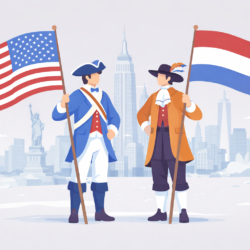
The Great Patriot Showdown

Section 1: The Flag Fashion Statement – Orange You Curious?

Stars and Stripes Meet the Tricolor Trinity

First and foremost, let’s discuss the elephant in the room—or should I say, the eagle and the lion? Americans absolutely worship the flag. They wear it on their clothing, slap it on car bumpers, and practically turn it into a personality trait. Meanwhile, the Dutch take a considerably more casual approach to their red, white, and blue banner. Instead of flag-themed everything, the Dutch nation channels their patriotic passion directly into one glorious obsession: the color orange.

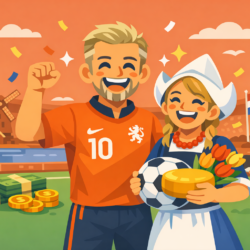
Transitioning to the most spectacular display of Dutch patriotism, watch what happens when the Dutch Football Team takes to the field! Suddenly, the entire nation erupts in an explosion of orange that would make a Nickelodeon studio jealous. Dutch fans sport orange wigs, paint their faces, dye their hair, and basically transform themselves into living carrots. One could argue that Americans express patriotism through flags, while the Dutch express it through a single, gloriously artificial color that doesn’t even appear on their national flag. Consequently, Dutch patriotism wears orange like it’s an unofficial fourth stripe in their tricolor.

Section 2: Volume Control – Subtle Dutch Whispers Versus American Megaphones

When Patriotism Gets Loud

Subsequently, we arrive at the most crucial difference: volume settings. Americans crank their patriotism up to eleven with stadium rock anthem National Anthems, fireworks that shake your ancestors’ graves, and barbecues that practically require military planning. The USA doesn’t merely celebrate patriotism; they announce it with a megaphone while riding a bald eagle. Every Fourth of July transforms the nation into an explosion of red, white, and blue enthusiasm that can apparently be seen from space.

In contrast, Dutch patriotism operates on a completely different frequency. The Dutch demonstrate their love for their country with a knowing smile, a strategic mention of their golden age, and perhaps a gentle reminder that they basically invented water management. Their patriotism manifests as quiet confidence rather than loud proclamation. Therefore, when Dutch people express national pride, they do so with the understated elegance of someone who’s already won and doesn’t need to keep score. They don’t need fireworks; they have bicycles and cheese.

Section 3: The Sacred Holidays – Independence Versus Bicycle Lane Pride

Celebrations That Reveal National Character

Moving along to holiday celebrations, Americans transform the Fourth of July into a national spectacle complete with parades, Declaration readings, and enough grilled meat to feed a small country. Independence Day invites every citizen to participate in an enormous performance celebrating their nation’s birth. This patriotism feels theatrical, intentional, and wonderfully over-the-top.

Lastly, the Dutch celebrate King’s Day—or Koningsdag—which simultaneously honors their monarchy and represents pure, unfiltered chaos dressed in orange. This celebration doesn’t require elaborate speeches or military flyovers; it simply requires orange, music, floating parties on canals, and collective abandon. Rather than commemorating a political break-from-the-past like Americans do, the Dutch celebrate their connection to their country through revelry and community. All things considered, both nations burn bright with patriotic pride—America just uses amplifiers while the Dutch use strategic marketing combined with excellent beer.and the fugitive, who had turned now, following remotely.

My Life in a USA Prepared for World War III….

Here is a look at where we stand with the escalating crisis over Greenland and what it means for those of us caught in the middle.


The Arctic Standoff: Trump’s “Absolute Necessity”

Since returning to office, President Trump has transformed what once seemed like a bizarre real estate whim into a central pillar of his “Donroe Doctrine.” He has labeled the acquisition of Greenland an “absolute necessity” for national security, citing the need to control the Arctic’s critical minerals and prevent Chinese and Russian expansion.

However, the response from the Kingdom of Denmark has been a firm, unwavering “No.” Greenlandic officials have made it clear: they are a people, not a commodity. This “fundamental disagreement” has reached a breaking point this week following high-stakes meetings in Washington that ended in total deadlock.

The Military “Tripwire” in the North

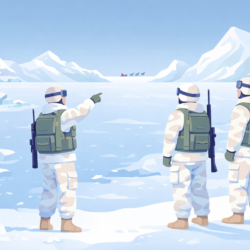
The situation has moved beyond rhetoric. For the first time in the modern era, we are seeing a military buildup in Greenland specifically intended to deter a fellow NATO ally—the United States.

  • Denmark has significantly boosted its military presence, deploying ships, drones, and fighter jets.
  • Sweden, Germany, France, and the UK have already sent personnel as part of Operation Arctic Endurance.
  • The Netherlands has just confirmed it will send military personnel to prepare for exercises, a small but symbolic move that signals European unity against any unilateral US action.

Many experts warn that if the US attempts to take Greenland by force, it would be the end of NATO. As Article 5 states, an attack on one is an attack on all. If the US attacks Denmark’s territory, it effectively declares war on its own alliance.


The Home Front: Living in the Shadow of ICE

For those of us living in the US with international roots, the “Greenland Grab” isn’t just about a distant island; it’s about a climate of nationalism that feels increasingly dangerous.

The administration’s focus on “national security” has translated into aggressive interior enforcement. We are seeing developments that justify the “scary times” many of us feel:

  • The Laken Riley Act: This 2025 legislation allows for indefinite detention based on mere accusations, bypassing much of the due process we once took for granted.
  • Financial Surveillance: USCIS has shifted to a mandatory digital payment system. While framed as “modernization,” reports suggest this infrastructure allows the government to track financial data and, in some cases, move to freeze the bank accounts of those deemed a “danger to the country.”
  • Surging Detentions: ICE detention rates increased by over 75% in 2025, with many arrests targeting people with no criminal records.

When you have an accent or a history of immigration, these aren’t just policy changes—they are personal red flags.


Lessons from my Past

My parents survived the rise of fascism in the 1940s. They taught me that the signs of a crumbling democracy are always there if you know how to look: the targeting of “outsiders,” the dismissal of international treaties, and the prioritization of land and resources over human rights.

We are at a crossroads. The attempt to “acquire” a sovereign territory like Greenland by force would not just be a territorial dispute; it would be the spark for a global conflict that pits the US against its oldest allies in Europe.

How I Am Preparing:

  1. Diversifying Information: Like many, I am strictly following non-American news sources (BBC, Deutsche Welle, and Dutch outlets) to get a perspective outside the domestic echo chamber.
  2. Financial Vigilance: Given the reports of account freezing, I am already looking into alternative ways to secure my income and savings and ensure their families are protected.
  3. Staying Quiet, Staying Informed: In an era where even an accent can draw unwanted attention, staying informed is the best form of defense. After all, I still have a strong accent!

The world is watching. We can only hope that diplomacy prevails before the “tripwire” in Greenland is tripped, leading us into a conflict no one can win. I’m afraid acquiring Greenland is a part of a plan of Trump. He wants a war with Europe, so he has a ‘reason’ to acquire (parts of Europe) as well. I’m already living in fear and hope (and even pray) Trump will not acquire Greenland… but the tensions will stay until the USA has a new chosen president!! The future is in the hands of the American voter in a system with 2 corrupt parties…..

NOTE: I admit I have used AI for this blog article, but mainly to fact check and improve my writing.m, impotently rebounds from it. It is as though the forehead of the Sperm Whale were paved with horses’ hoofs. I do not think that any sensation lurks in it.

Decoding the Tulip Talk: Holland or the Netherlands?

🧩 The Puzzle of Terminology: What’s in a Name?

The term “Holland” is often used as a shorthand for the entire country, but technically, it refers to only two provinces within the Netherlands: North Holland and South Holland. These regions are home to major cities like Amsterdam (the capital) and Rotterdam, which might explain why Holland has become so synonymous with the country itself. However, using Holland to describe the whole nation is like calling the United States “Texas”—it’s geographically inaccurate and overlooks the diversity of the region.

On the other hand, the Netherlands encompasses 12 provinces in total, each with its own unique identity, traditions, and even dialects. From Groningen in the north to Limburg in the south, the country boasts a rich tapestry of cultures that extend far beyond Holland’s borders. Therefore, while Holland plays a significant role in the Dutch economy and global image, it doesn’t represent the full picture of what the Netherlands truly is.


🌍 Beyond Borders: Understanding the Difference

To fully grasp the distinction between Holland and the Netherlands, it’s essential to look at geography. The Netherlands literally means “low countries,” reflecting its low-lying landscape and extensive system of dikes and canals designed to manage water levels. This small yet mighty nation sits on the edge of Europe, bordered by Germany, Belgium, and the North Sea. Its strategic location has made it a hub for trade, innovation, and multiculturalism over centuries.

Meanwhile, Holland specifically gained prominence during the Dutch Golden Age in the 17th century when it became a center for art, science, and maritime power. Cities like Amsterdam flourished as trading ports, leaving an indelible mark on world history. As a result, many outsiders began associating Holland with the achievements of the entire country. While this association remains strong today, it’s important to recognize that the Netherlands’ success stems from contributions across all its provinces, not just those in Holland.


✨ Embracing Diversity: A Nation United

Although the difference between Holland and the Netherlands may seem trivial, acknowledging this nuance fosters a deeper appreciation for the country’s diversity. Each province contributes something special to the national identity—from Friesland’s distinct Frisian language to Zeeland’s stunning coastal landscapes. By understanding the broader context of the Netherlands, travelers and enthusiasts alike can engage more meaningfully with its culture and heritage.

Moreover, recognizing the distinction helps dispel stereotypes and encourages curiosity about lesser-known areas outside Holland. For instance, visiting Utrecht’s medieval charm or exploring Eindhoven’s cutting-edge design scene offers a fresh perspective on what the Netherlands has to offer. Ultimately, embracing both Holland and the rest of the Netherlands allows us to celebrate the country’s multifaceted character and vibrant spirit.

The Curious Case of the Cookie Formerly Known as Speculaas

Instead of its perfectly respectable Dutch name, it’s wearing a fake passport and answering to SpeculoosSpeculatius, or my personal favorite: “Windmill Cookies.”

Windmill. Cookies.

As if the cookie itself is powered by renewable energy.


A Cookie With an Identity Crisis

Back home in the Netherlands, speculaas knows exactly who it is.
It’s bold. Spicy. Confident.
A cookie that says: “Yes, I contain cinnamon, cloves, nutmeg, cardamom, ginger, and possibly the soul of Sinterklaas himself.”

But the moment it crosses a border, this cookie panics.

“Oh no,” it says, sweating powdered sugar.
“Speculaas sounds… foreign. Let’s call it Speculoos. That sounds French. People trust French things.”

And just like that, the cookie reinvents itself.


Speculoos: The Fancy Cousin

Speculoos sounds like something you eat while wearing a scarf indoors.
It implies café tables, tiny espresso cups, and a strong opinion about art.

Same cookie.
Different accent.

Some brands even pretend it’s Belgian, which is bold, considering the Dutch and Belgians have been arguing over fries, borders, and cookies for centuries.

It’s like calling Gouda “Smiley Yellow Cheese Wheel.”


Speculatius: The Academic Phase

Then there’s Speculatius.

This version sounds like it was discovered in a library.

“Ah yes, Speculatius Biscottius, first documented in 1683.”

No one eats speculatius.
They study it.

You don’t dip it in coffee—you reference it in a footnote.


Windmill Cookies: Peak Marketing Chaos

And finally… Windmill Cookies.

This is where all logic collapses.

At no point in the history of speculaas did anyone say:
“You know what really defines this cookie?
Architecture.”

What’s next?

  • Stroopwafels → Caramel Frisbee Discs
  • Oliebollen → Fried New Year Orbs
  • Hagelslag → Breakfast Sprinkles of Emotional Support

Calling it a windmill cookie is like calling pizza “Leaning Tower Bread.”

Yes, the Netherlands has windmills.
No, we don’t bake them into everything.


Why Not Just Call It Speculaas?

Is it too spicy?
Too Dutch?
Too many vowels doing suspicious things?

Americans learned to pronounce Worcestershire.
They can handle speculaas.

It’s one word.
It’s delicious.
And it doesn’t need a witness protection program.


Conclusion: One Cookie, Many Aliases

So the next time you see speculoosspeculatius, or windmill cookies on a shelf, know this:

You are looking at speculaas in disguise.
A proud Dutch cookie pretending to be international.

And deep down, under the branding, it’s still whispering:

“Just call me speculaas. I know who I am.”tes she heard a voice outside, and stopped to listen.

Credit Card Showdown: When Uncle Sam Swipes and Dutch Thrifty Folks Save

🎭 The Plastic Parade: American Credit Card Carnival

Picture this: An average American’s wallet looks like a colorful credit card festival, bursting with rectangular promises of instant gratification. Every mailbox becomes a treasure trove of tantalizing credit offers, screaming “PRE-APPROVED!” in bold letters. Credit card companies hunt consumers like eager salespeople at a county fair, waving flashy rewards and signup bonuses.

Young Americans often receive their first credit card before they can legally order a beer. College campuses transform into credit card distribution centers, where students trade student IDs for shiny plastic that whispers, “Buy now, worry later!” The culture doesn’t just embrace credit cards; it practically worships them as financial freedom tokens.

🚲 Dutch Financial Zen: Cash is King (and Queen)

Meanwhile, in the Netherlands, financial attitudes look dramatically different. Dutch people approach money with the precision of a carefully engineered dike – controlled, strategic, and wonderfully pragmatic. Instead of drowning in credit, they prefer swimming in their own financial resources.

The typical Dutch person views credit cards as suspicious foreign objects. They’d rather use debit cards connected directly to their bank accounts, ensuring they spend exactly what they’ve earned. This approach reflects a broader cultural philosophy: why borrow money when you can intelligently manage what you already have?

🌍 Cultural Cash Clash: Psychology Behind the Plastic

Interestingly, these divergent approaches reveal deeper cultural narratives. Americans celebrate individualism through financial risk-taking, while Dutch culture prioritizes collective financial stability. Credit cards in the USA represent opportunity and potential, whereas in the Netherlands, they symbolize unnecessary complexity.

The American dream often involves leveraging future earnings, while the Dutch dream involves carefully cultivating present resources. One culture sees credit as a tool for advancement; the other sees it as a potential trap waiting to spring shut.

💡 Hilarious Reality Check: Credit Card Consequences

Don’t misunderstand – both systems have pros and cons. Americans enjoy incredible reward programs and credit-building opportunities. Dutch folks maintain impressive personal financial health with minimal debt. Yet, each approach carries its unique comedic undertones of financial philosophy.

Imagine a Dutch person’s horror watching an American swipe a credit card for a $4 coffee, or an American’s bewilderment at a Dutchman meticulously calculating exact change. These cultural financial dance moves provide endless entertainment and insight.

Conclusion: In the grand theater of global finance, credit cards serve as fascinating cultural passports, revealing more about societies than mere monetary transactions.

Close
Verified by MonsterInsights