
-
-
- Total football emphasizes flexible, interchangeable player roles, coordinated pressing, and purposeful ball circulation to create space and sustained attacks.
- The Dutch influence highlights high-press philosophy, spatial awareness, and tempo control, adaptable across clubs and national teams in modern leagues.
- Development focuses on multi-position training, cognitive growth, and adaptable coaching to enable quick transitions and collective decision making.
- Practical steps for training include small-triangle drills, clear pressing triggers, and simulated defense-to-attack transitions to maintain balance and intensity.
-
Table of Contents
- Introduction
- 1. The Tactical Core: Interchangeable Roles and Fluid Positioning
- 2. The Dutch Influence: From the 1970s to Global Modernism
- 3. Pressing and Space Control: the High Press Philosophy
- 4. Ball Circulation and Tempo: Building Attacks with Purpose
- 5. Development Pathways: Training for Total Football
- 6. Variants in Modern Leagues: Adapting Total Football Today
- FAQ
- Conclusion
Introduction
What total football is and where it originated
Total football is a philosophy where players freely interchange positions while maintaining structure. It relies on high intensity pressing, quick ball circulation, and intelligent use of space to create overloads. In the Netherlands, it found its roots and reached a peak with the 1970s Dutch national team, then influenced clubs across Europe. Expect players to step into unfamiliar roles to sustain momentum and to exploit gaps in the defense.
Practical example at a club level: a midfielder drops into defense as the ball is played wide, while a full back tucks inside to form a temporary back three. This keeps pressure on the ball carrier and opens passing lanes for a forward run. Coaches implement this through 4v4 or 5v5 rondos with rotating positions to train instinctive swaps under fatigue.
1. The Tactical Core: Interchangeable Roles and Fluid Positioning
Understanding positional versatility
Total football centers on players who can adapt on the fly. A midfielder might drop into defense, while a fullback pushes into midfield to sustain possession. This fluidity keeps the shape malleable, allowing a team to overload zones or compact when out of possession. The goal is seamless transitions that threaten in multiple directions.
Teams cultivate this by developing core skills that translate across roles. Ball control, decision making under pressure, and spatial awareness become universal tools rather than fixed duties. The result is a flexible unit that can respond to shifting game tempo without losing defensive balance.
Key players who embody total football
-
-
- Players who read the field rapidly and adjust roles within seconds, such as a central midfielder dropping to shield the back four as the winger presses higher.
- Midfielders capable of both creative distribution and disciplined tracking back, ensuring quick transitions from defense to attack.
- Defenders comfortable stepping into midfield lines to maintain ball circulation, then sprinting back to thwart counters.
- Wingers who invert into central zones to create numerical advantages, pulling defenders out of position.
-
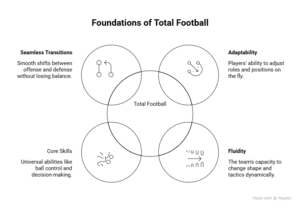
Note: The essence lies in collective discipline. Individual prowess supports team structure, not the other way around. This shared understanding enables quick recovery from missteps and steady pressure across the pitch.
2. The Dutch Influence: From the 1970s to Global Modernism
Historical roots in the Netherlands
The Dutch approach combines technical precision with collective pressing. In the 1970s, interchangeable roles and compact pressure opened passing lanes and stretched opponents, blending artistry with structure to influence the game beyond borders.
Youth systems long emphasized reading multiple lines, anticipating opponents, and transitioning between phases. This created players able to sustain pressure while maintaining ball circulation under fatigue. Practice drills often simulate overloads in wide areas to develop decision making under tempo.
Legacy across leagues and national teams
Across domestic leagues and national programs, the Dutch influence persists in training rhythms, player selection, and role flexibility. Coaches highlight spatial awareness, tempo control, and mid sequence shifts to keep balance while pressing.
-
-
- Ball circulation as a core habit rather than a luxury feature
- In‑game role fluidity that preserves balance under high press
- Coaching education that foregrounds adaptable decision making
-
Note: The model informs modern tactics worldwide, translating decision making, adaptive roles, and high‑tempo transitions into practical drills you can try at local clubs or academies to improve quick transitions and spatial awareness.
3. Pressing and Space Control: the High Press Philosophy
Pressure as a team-wide discipline
You press as a unit, not from a single burst of energy. Teams align triggers, timing, and coverage so pressure arrives as a coordinated front. This approach raises turnover risk higher up the pitch and narrows the opponent’s passing options.
Practically, squads train to press in lines, syncing angles and distances. The aim is to trap the ball carrier without losing balance behind the ball, accelerating transitions when possession is won.
In real matches, Dutch in the USA teams cue presses after backward passes or sloppy touches in midfield. Implement this by designating a focus area trigger, a middle line pressure, and a safeguard behind the ball to snap back within two seconds of contact.
Spatial awareness and compact defense
Space control comes from knowing where to compress and where to stretch. Defenders crowd central zones to deny vertical passes, while wingers drop to shut down wide options. Midfielders shield lanes and read switches in play.
Compact defense requires rapid recovery runs. When a line advances, teammates fill gaps to maintain a cohesive block. This discipline reduces penetration and keeps positions solid across the pitch.
-
-
- Coordinated pressing cues across the starting lineup
- Defined role responsibilities to sustain shape under pressure
- Sequential recovery runs that preserve overall balance
-
4. Ball Circulation and Tempo: Building Attacks with Purpose
Passing triangles and movement off the ball
Effective ball circulation hinges on creating predictable triangles that promote quick decisions. Moving the ball among three nodes keeps options open and disrupts the opponent’s compact shape. Off-ball runs draw defenders and open lanes for forward passes.
Players should anticipate teammates’ checks to space and adjust to defensive shifts. Quick one-twos vertically and horizontally break lines without sacrificing balance. This approach sustains forward momentum while keeping the shape intact.
-
-
- Triangular passing patterns that invite cover shadows and openings
- Runs that travel into pocket spaces to receive with options
- Maintained tempo to prevent predictable sequences
-
Speed of transition from defense to attack
Transition tempo determines whether you catch opponents out of position or release pressure before the defense reestablishes shape. Rapid distribution after winning the ball fuels fast breaks and numerical advantages.
Coaches emphasize minimal touch commitment in these moments. Quick decisions and precise outlets shorten the window for a reactive defense. The aim is to convert defensive wins into high‑quality attacking chances with minimal dilation of space.
-
-
- Immediate ball outlets to focal area players during turnover
- Strategic dribbles that probe gaps instead of reckless sprints
- Structured support runs that help maintain attacking balance
-
5. Development Pathways: Training for Total Football
Youth academies and skill breadth
Youth systems that embed total football principles start with broad technical foundations. Players build ball mastery, spatial awareness, and decision making from an early age. The aim is versatile creators who can adapt to changing roles during a match.
Programs emphasize cognitive development alongside technique. Players learn to read game states, anticipate passes, and adjust positioning without losing tempo. This holistic approach yields well rounded internationals capable of contributing in multiple areas of the field.
-
-
- Multi position exposure to build comfort in shifting roles
- Small sided games to encourage quick thinking and ball circulation
- Structured progression from simple to complex tactical tasks
-
Coach education and tactical experimentation
Coaching frameworks prize adaptable decision making over fixed prescriptions. Educators guide players to understand space, timing, and trigger movements. The emphasis is on teaching the why behind choices, not just the what.
Clubs and national programs experiment with formations and sequences in controlled environments. This experimentation informs match plans that stay balanced while exploiting opponent weaknesses. The result is coaches who can tailor core principles to different squads and contexts.
-
-
- Credential programs that value analytical planning and flexible drills
- Mentorship from practitioners who have implemented total football across leagues
- Regular review cycles to refine transition patterns and pressing triggers
-
6. Variants in Modern Leagues: Adapting Total Football Today
Club adaptations in Europe
Across European leagues, teams blend total football with compact defensive blocks and flexible wing play. The approach adjusts to the talent pool, stadiums, and scheduling demands, yielding varied tempos and pressing intensities. Coaches emphasize spatial awareness and decisive actions to maintain ball possession under pressure.
At the club level, layered pressing patterns emerge, with midfielders pressing in sequence and attackers pressing to restrict exits. This creates pockets of space for rapid ball recovery and quick transitions into attacking phases. Drills connect backline compactness with focused pressure zones.
-
-
- Flexible formations that shift between 4-3-3 and 3-4-3 setups
- Wing play that supports vertical passes and overloads on the flanks
- Defensive lines that drop or push higher based on ball location
-
National teams adopting the approach
National teams weave total football traits into broader tactical identities, valuing versatility among midfielders and forwards to enable seamless role swaps mid match. The emphasis is on collective anticipation and intelligent ball circulation to exploit transitional moments.
System choices vary by opposition and tournament stage, but the core remains solving space with coordinated pressure and purposeful passing. Coaches shape game plans around ball speed and off-ball movement to create scoring chances while preserving defensive balance.
-
-
- Players trained for multiple positions from youth levels
- Set-piece structures aligned with fluid in-play moves
- Scouting to identify adaptable technicians and intelligent runners
-
Practical implementation tips
Begin with a clear pressing trigger. Employ a high press when the opponent builds from the back, then shift to a compact mid-block to bridge the spaces between lines.
European clubs highlight the value of wing support. Train wide players to arrive late in the box for rebounds and to pin fullbacks, creating overloads that quicken circulation.
Key caveat A tall press without defensive shape invites quick switches. Pair pressing with disciplined relocation to space behind the ball.
FAQ
Here are common questions about total football and its influence on the modern game. The aim is to clarify how these ideas travel from historical roots to today’s international landscape.
-
-
- What defines total football in practice? It centers on flexible positions, coordinated pressing, and rapid transitions that keep ball possession while dismantling spaces for the opponent. For example, a midfielder drops deep to create passing lanes, while a winger tucks inside to overload the central zones.
- How does the Dutch lineage shape current tactics? The concept travels through coaching philosophies, youth development, and system experimentation across clubs and national teams. In the Netherlands, academies emphasize positional interchange and game IQ from U12 onward.
- Which leagues most visibly apply these ideas? European leagues blend total football with structured defense, adaptable formations, and high tempo pressing schemes. Look for teams that switch between 4-3-3 and 3-4-2-1 based on opponent patterns.
- Can total football succeed in international tournaments? Yes, when players are versatile, systems are fluid, and decisions are fast under varying match conditions. Tournament games often hinge on a timely positional shift that opens a goal threat.
- What role do youth academies play? They build multi-position capability and spatial awareness early, enabling players to shift roles without losing tempo. Dutch in the USA recommends drills that simulate 3v3 overloads with rotating positions after every goal.
-
| Aspect | Impact |
|---|---|
| Positional versatility | Increases adaptability during games and against diverse opponents |
| Team-wide pressing | Forces quick turnovers and maintains control of the ball |
| Passing tempo | Creates fast transitions from defense to attack |
Conclusion
Summary of core principles
Total football centers on flexible roles, coordinated pressing, and intelligent ball movement. The idea is to solve space as a unit, not as isolated individuals, with quick transitions and compact defenses that keep opponents off balance. Ball circulation emphasizes triangles, diagonal switches, and speed to unlock forward runs.
Key elements include adaptability across positions, a shared understanding of pressing triggers, and a tempo that suits the available talent. Teams train to read cues, anticipate opponents, and maintain balance while applying pressure. The result is a cohesive system that thrives on collective decision making rather than heroics from a single player.
Relevance for players and fans in the USA and beyond
In the United States and Canada, total football offers a framework for developing versatile players who can switch roles midgame. Youth programs benefit from breadth of skill, not specialization alone. Coaches gain a mental model for matching talent to pressing intensity and passing tempo.
For fans, the approach highlights the beauty of movement, timing, and teamwork. You’ll notice how a defense compresses space, how one quick pass reshapes the attack, and how a squad maintains rhythm under pressure. The ideas travel well across leagues, from domestic clubs to international showdowns in World Cup cycles and beyond.
Practical steps you can apply
-
-
- Practice small triangles in every drill: one defender, two attackers, and quick ball circulation within 6 seconds.
- Use color-coded cues for pressing triggers, such as if the winger tucks inside or if the fullback steps high.
- In training, simulate transitions with a 5 second window to switch from defense to attack, then mirror it in match simulations.
-
Common pitfalls to avoid
-
-
- Overloading one area of the pitch, which creates predictable passing lanes.
- Neglecting backline communication, causing misreads during high tempo pressure.
- Relying on a single hero instead of cultivating collective decision making.
-
Tip for Dutch in the USA readers: emphasize adaptable training paths that translate to local youth leagues while preserving the core idea of total football.
References
|