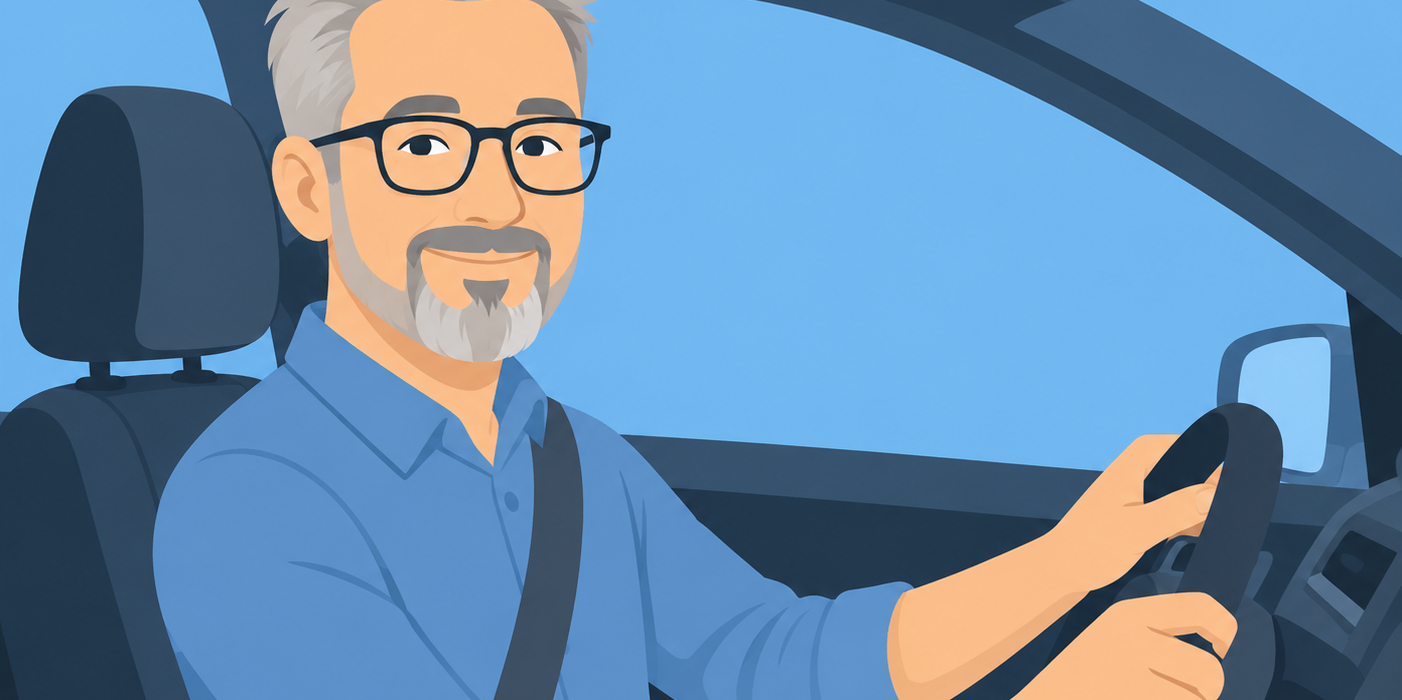
When I moved from the Netherlands to the United States, one thing quickly became clear: in America, a car is not a luxury—it’s practically an extra family member.
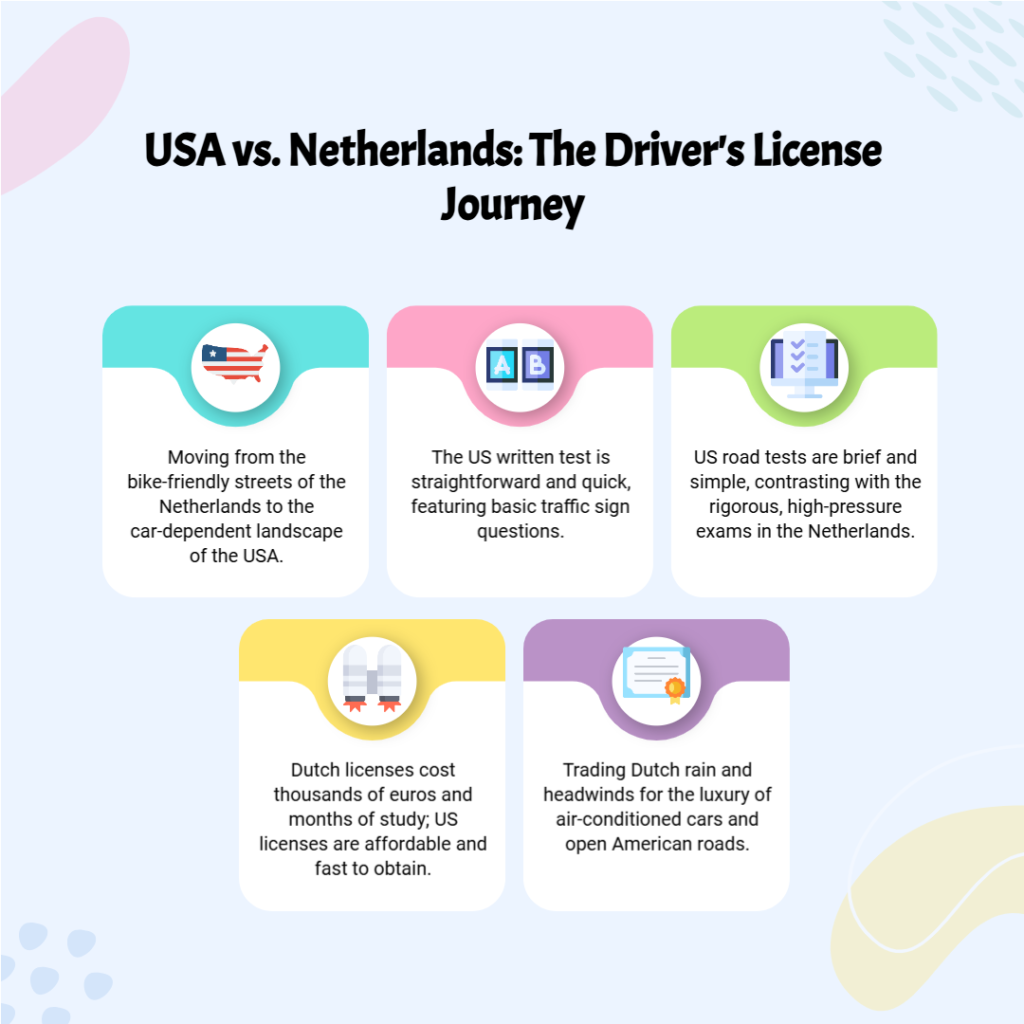
Back in the Netherlands, I had never really needed to drive. Dutch cities are built for bicycles, trains, buses, and the occasional brave soul on roller skates. Need groceries? Hop on a bike. Need to visit another city? The train will take you there. Need exercise? Just pedal against the wind for fifteen kilometers. That’s cardio and transportation in one package.
America, however, has a slightly different approach.
Want milk? Drive.
Want to visit a friend three blocks away? Drive.
Want to check the mailbox? I’m pretty sure some people drive.
So, after years of being a passenger prince, I decided it was finally time to become a driver.
The Written Test
Friends had warned me that getting a driver’s license in America was easy. Being Dutch, I naturally assumed they were exaggerating.
They weren’t.
I made an appointment and took the written test. Thirty-five questions. That’s it.
Questions like:
“What does a red octagonal sign mean?”
I resisted the urge to answer, “Decorative modern art.”
Honestly, most questions seemed easier than some online personality quizzes. I passed without breaking a sweat.
The Road Test
Two weeks later came the big moment: the driving examination.
I had visions of the Dutch driving exam, where instructors practically expect you to perform synchronized swimming with your car while demonstrating your knowledge of medieval traffic regulations.
In the Netherlands, obtaining a license is serious business. Lessons can easily cost between €2,500 and €4,000 ($2,900-$4,600), and many people need several attempts before passing. The practical exam lasts around 35 to 55 minutes and examiners inspect every move as if they’re judging Olympic figure skating.
In America?
I drove around the block.
Literally.
A few turns, stop signs, parking, and before I knew it, the examiner said, “Congratulations.”
That was it?
I was expecting at least a surprise round or a request to parallel park between two Ferraris.
Nope.
The Cost Difference
The difference in cost is almost as surprising as the difference in difficulty.
Netherlands
- Driving lessons: €2,500–€4,000 ($2,900–$4,600)
- Theory exam and practical exam fees extra
- Often months of preparation
- Multiple attempts are common
United States
- Learner’s permit and license fees: often around $0–$100, depending on the state. In my case it was only $0.00!!!
- Most people practice with family members instead of taking expensive lessons
- Entire process can be completed in a few weeks
As a Dutchman, I almost felt guilty.
Almost.
Becoming an American Driver
Today, I proudly possess an American driver’s license. I still smile every time I remember that my “epic” road test involved approximately the same distance as walking to the bakery in the Netherlands.
But I have to admit, driving in America is liberating. Distances are enormous, public transportation is limited in many places, and having a car opens up a whole new world.
Besides, after years of cycling through Dutch rain and headwinds, sitting in an air-conditioned car with a cup holder feels suspiciously luxurious.
I haven’t completely abandoned my Dutch roots, though.
Whenever I see someone drive two blocks to the gym, I still hear a little voice inside saying:
“You know, in the Netherlands we’d bike there…”
And then I turn up the air conditioning and continue driving. 🇳🇱🚗🇺🇸